
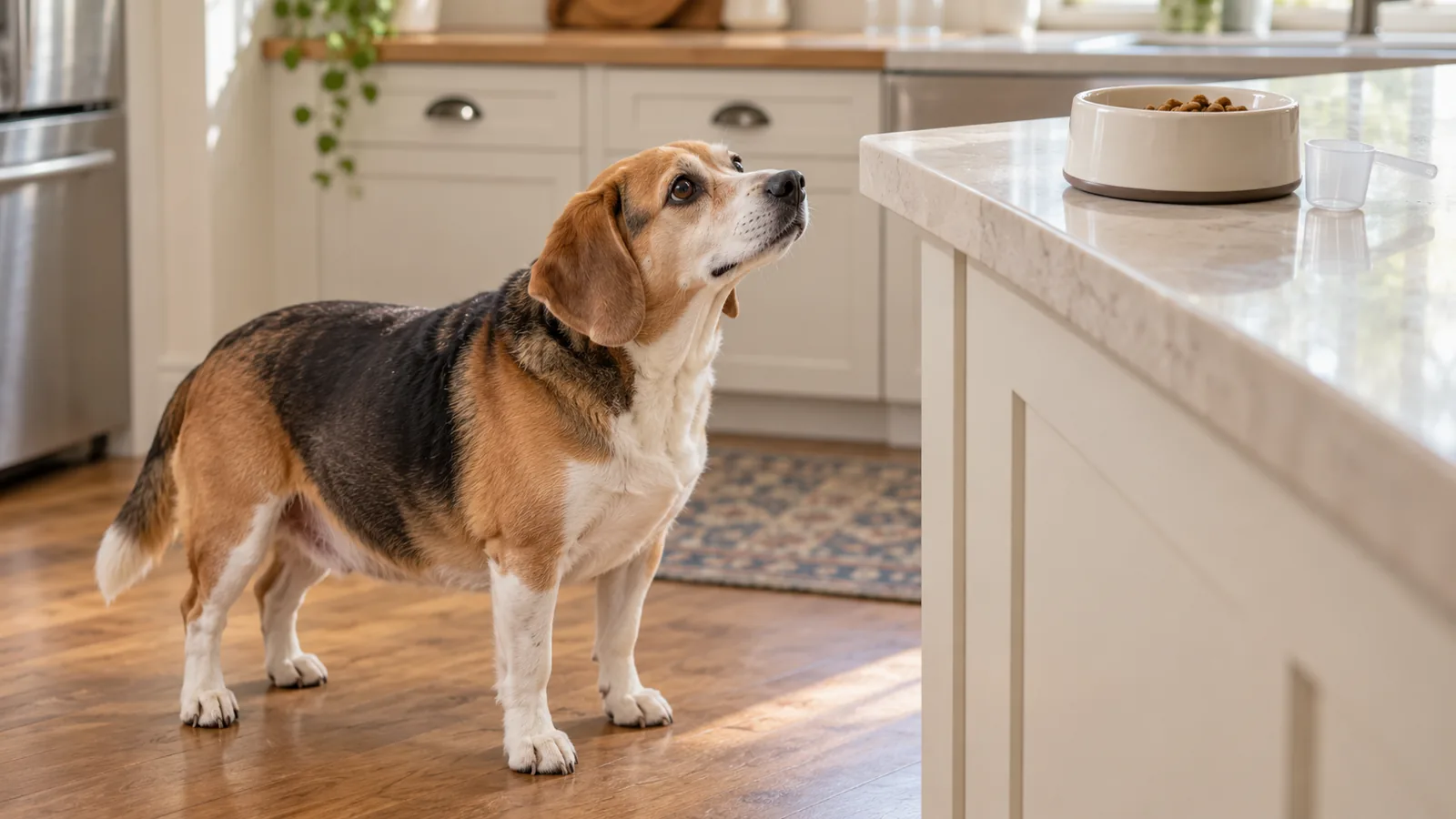
Your pet's weight can change because of what is in the bowl, or because of something medical that no calorie calculator can account for. Thyroid disease, diabetes, arthritis pain, sore teeth, and digestive problems all shift weight while the feeding routine stays exactly the same. Changing their diet without investigating the cause of the weight gain or loss can mean delaying care of a treatable problem.
Watching your pet's weight drift without knowing why is stressful, and changing the food amount on a guess rarely settles it. At Sonoran Sky Pet Hospital in Mesa, we start with a hands-on exam and bloodwork, because conditions like thyroid disease and diabetes need an internal medicine workup rather than a smaller or larger scoop. Once we know what is behind the change, our wellness and nutrition counseling gives you a feeding plan built around your own dog or cat instead of an average one. If the scale has moved and you cannot account for it, schedule a weight consultation so we can find out why.
Feeding the Right Amount: Start Here
- When the food amount hasn't changed but your pet's weight has, the cause is usually medical rather than the portion size.
- A calculator hands you a starting number, not a final one, since age, activity, spay or neuter status, and body condition all shift the target.
- Treats and table scraps are where most carefully measured plans come apart.
- Cats have to lose weight slowly, since cutting a cat's food too far too fast can set off a serious liver condition.
When Is a Weight Change a Medical Problem, Not a Feeding One?
A weight change that happens while the feeding routine holds steady is a medical question first, and a different scoop only hides the cause while it progresses. Thyroid disease, diabetes, kidney changes, cancer, sore teeth, arthritis pain, and digestive trouble can all move the scale on their own.
Each of these conditions tends to leave other clues alongside the change on the scale.
- An overactive thyroid, most common in older cats, burns through calories so fast that a cat can eat more than ever and still get thinner.
- An underactive thyroid in dogs does the opposite, adding pounds along with low energy and a thinning coat.
- Diabetes often pairs weight loss with a bigger appetite, heavier drinking, and more urine.
- Kidney disease and many cancers wear muscle down gradually, so the loss often shows first along the spine and hips.
- Sore teeth can make a pet chew on one side, drop food, or walk away from kibble.
- Arthritis pain cuts activity enough that weight creeps up even on the same scoop.
- Digestive problems, such as chronic intestinal inflammation or trouble absorbing nutrients, can thin a pet out even when the appetite looks normal.
A hands-on exam, bloodwork, and a urine test usually narrow the list quickly, which is why a weight change with no clear reason is worth a visit before a new feeding plan.
How Do I Check My Pet's Body Condition at Home?
You can check body condition with your eyes and your hands in about a minute. Body condition scoring runs on a 1 to 9 scale, and a 4 or 5 is where you want your dog or cat.
Two pets can weigh the same and have completely different bodies, and a pet whose weight holds steady while muscle mass disappears isn't thriving. We score condition at every exam alongside the weight, running a hand over the spine, shoulders, and hips rather than trusting the scale alone.
| What you find | Score | What it looks and feels like |
| Too thin | 1 to 3 | Ribs, spine, and hip bones easy to see, little fat cover |
| Ideal | 4 to 5 | Ribs easy to feel under a thin layer, waist visible from above, belly tucks up from the side |
| Overweight | 6 to 7 | Ribs take effort to find, waist hard to make out, fat over the base of the tail |
| Obese | 8 to 9 | Ribs can't be felt, belly sags or swings, fat pads over the hips and chest |
Once a month is plenty at home. Put your hands on your pet the same way each time, and trust your hands over your eyes with a fluffy cat or a double-coated dog, where the coat hides what the body is doing.
Why Do Calories Matter So Much for Dogs and Cats?
Calories matter because a small daily surplus becomes real weight over months, and pet food carries more energy per cup than many families expect. Pet obesity affects more than half of the dogs and cats in the United States, and much of it traces back to portion size and everything handed out between meals.
Calories are only part of how much to feed. Age, activity level, spay or neuter status, body condition, and existing health concerns each move the target, sometimes by a third or more in either direction.
The makeup of those calories matters too:
- Protein: helps hold on to lean muscle while weight comes off.
- Fiber: adds bulk and a feeling of fullness without much energy at all.
- Fat: the densest energy source in the bowl, at roughly twice the calories per gram.
Matching the food to the pet is the work of a nutrition consult: a four-year-old herding dog who hikes on weekends and a twelve-year-old indoor cat need very different strategies.
What Makes a Prescription Weight Loss Diet Different?
Prescription weight loss diets typically go through feeding trials and are built to take fat off while holding lean muscle, with a protein-to-calorie ratio set for that job. Making a portion smaller also decreases the nutrients they need to stay healthy, while a prescription diet decreases fat while maintaining the right amount of vitamins and minerals. Weight loss diets are also built to leave a pet feeling full, with controlled fiber levels to satisfy a pet on fewer calories. If your pet has considerable weight to lose, or has other medical conditions, a prescription diet is often the safer way to go.
How Do I Use a Pet Calorie Calculator Correctly?
Treat the number a calculator gives you as a starting point you test on your own pet. A calorie calculator takes current weight, body condition score, and life stage and returns a daily energy target that can include a treat allowance instead of letting treats ride on top.
- Gather three numbers first: your pet's weight from a real scale, their body condition score, and the calories per cup from the bag or the maker's website. Kcal per cup swings widely between foods, even within one brand.
- Run it both ways: once for food alone, once with a treat allowance set aside, commonly around ten percent of the day's total.
- Measure what you feed: use a leveled measuring cup or a kitchen scale. The plastic scoop in the bin isn't a measuring cup, and it runs generous.
- Recheck in a few weeks: weigh your pet, put your hands on them again, and adjust from what you find rather than from the formula.
A calculator can't know the rest of your pet's life: the arthritis that cut their walks in half, the thyroid level nobody has checked, the three people in the house feeding treats, stolen food from the cat bowl, or whether the food is complete and balanced. A dog who hikes all winter and then waits out a Mesa July in the air conditioning is burning less by midsummer, so a plan built in February can leave them heavier by fall. If the target doesn't match what you're seeing, give us a call and we'll help you adjust it.
Where Are the Hidden Calories Coming From?
Hidden calories come from everything that isn't a meal: training rewards, dental chews, the last bite of a sandwich, and whatever the second person in the house hands over without knowing the first already did.
A 20-pound dog usually needs around 400 to 500 calories a day, and a 10-pound cat closer to 200 to 250. A single dental chew can run 70 to 100, so the calories in treats can take a fifth or more of a small dog's daily total in a blink.
| Extra | Roughly how many calories |
| One slice of American cheese | Around 70 |
| A tablespoon of peanut butter | Around 95 |
| A large dog biscuit | 40 to 100 |
| A quarter cup of kibble through the day | Around 90 to 110 |
| A baby carrot or a few green beans | Under 10 |
Chews have their place, though they don't take the place of dental cleanings, and they're the easiest thing to trade out when the daily total runs over.
How Do I Keep Treats From Adding Up?
Portion the whole day's food once in the morning, treats included, into an empty tub or a zip bag on the counter. Every reward comes out of that measure instead of riding on top of meals, and whatever is left at bedtime goes in the food bowl.
Anyone walking through the kitchen can see how much is left, which keeps three people from each giving a first treat. Most dogs and plenty of cats will work happily for their own kibble, so nothing extra has to be bought. Swapping higher-calorie treats for low-calorie options, like sliced carrots, apples, blueberries, or green beans, can also make a difference. If your pet eats canned food, set the day's portion aside in the fridge and spoon from that container the same way.
What Health Risks Does Extra Weight Cause in Pets?
Extra weight raises the risk of problems in nearly every body system:
- Blood sugar: Extra weight raises the risk of diabetes mellitus. The earliest signs, such as drinking more, urinating more, and losing weight while the appetite stays strong, are easy to write off as a pet getting older.
- Urinary tract: Urinary stones are linked to body condition and to how little water some pets drink.
- Joints and spine: Arthritis and intervertebral disc disease get worse with extra load on the joints, and a Dachshund carrying two extra pounds asks more of every disc jumping off the couch.
- Blood pressure: High blood pressure is linked to heavy body condition and wears on the heart, kidneys, and eyes.
- Heat tolerance: A heavy dog or cat sheds heat less efficiently than a lean one, and even a short midday walk in July can be too much for an overweight pet.
The easiest way to keep your vet bills low is to keep your pet’s body condition lean.
How Often Should My Pet's Feeding Plan Be Rechecked?
Most adult dogs and cats do well with a formal recheck at their yearly exam, moving to twice a year in their senior years, since needs drift with age, weather, and activity. A monthly hands-on check at home fills the gap and catches a slow change while it's still a small adjustment.
A pound lost over twelve months doesn't show day to day, but on a 10-pound cat that's a tenth of their body weight. Wellness exams catch it with a scale, a condition score, and the same hands year after year. Bring a photo of the food label and a list of what every person in the household gives.
Why Do Cats Need to Lose Weight More Slowly Than Dogs?
Safe weight loss for cats is about half a percent to one percent of body weight per week, so a 15-pound cat should be dropping a couple of ounces in a week, not a pound. Cutting a cat's food too far or too fast can set off hepatic lipidosis, a condition where fat floods the liver faster than it can process it.
A cat who stops eating can be in real trouble within 48 to 72 hours, so one who hasn't touched food in 24 hours needs to be seen, and we can often fit them in the same day through our urgent care. If that happens on a weekend or once we've closed for the night, your cat needs a veterinary emergency hospital rather than a wait until Monday.
Can Puzzle Feeders and Scatter Feeding Help?
Puzzle feeders and scatter feeding help, because weight loss in dogs holds when calorie control is paired with daily movement and mental work. A handful of kibble scattered across the yard turns the same portion into fifteen minutes of effort instead of a quick gulp.
Cats need a version that fits how they hunt. Food puzzles, three or four small meals spread across the day, and bowls set where a cat has to climb or cross the house to reach them add movement to a day that otherwise happens in one spot.
What Families Ask Us About Portions and Begging
Can I just feed what the bag says?
The chart on the bag is a population average built around broad weight brackets, and it tends to run high for pets who live indoors and sleep on the couch. It's a reasonable place to begin, but it doesn't know your dog is neutered, eight years old, and walking twenty minutes a day. Start there, then adjust over the next month based on what your hands find over the ribs and waist.
My dog acts starving on the new amount. Am I underfeeding?
You're probably not underfeeding. A dog who finishes dinner in ten seconds will ask for more whether the bowl held one cup or three. Check the ribs and the waist, split the daily portion into three or four smaller meals, and stretch the time with a puzzle feeder. If the weight is still dropping or the hunger seems extreme, bring them in for bloodwork.
Does spaying or neutering make pets gain weight?
Spay and neuter surgery itself doesn't add weight, but it does lower the daily energy requirement by a noticeable margin. The gain happens when the portion stays where it was while the requirement drops underneath it. We can reset the target at the first exam after surgery and recheck body condition a few weeks later. A young dog or cat who is still growing needs enough to build muscle and bone, so this is a recalculation and not a cutback.
Getting Your Pet's Portion Right
A pet held at a healthy body condition moves more easily, carries less risk of diabetes and joint disease, and tends to get more good years. Our veterinarians at Sonoran Sky Pet Hospital in Mesa will weigh your pet, score their condition, and sort a portion problem from a medical one.
Small changes hold up better than dramatic ones, so book an appointment and we'll set a daily target, match a food to your own dog or cat, and tell you what to change first.





Leave A Comment